-
Infilling for comic book covers
This week I did an infilling treatment for comic book covers. This treatment was quite fun because the outcome looked okay, of course I still need more practice. These covers have a glossy surface that was a bit challenging. So far so good that I was satisfied with these attempts. Below I just quickly present the comparison of before and after treatment images. Any feedback please feel free to leave at the bottom of the comment box.
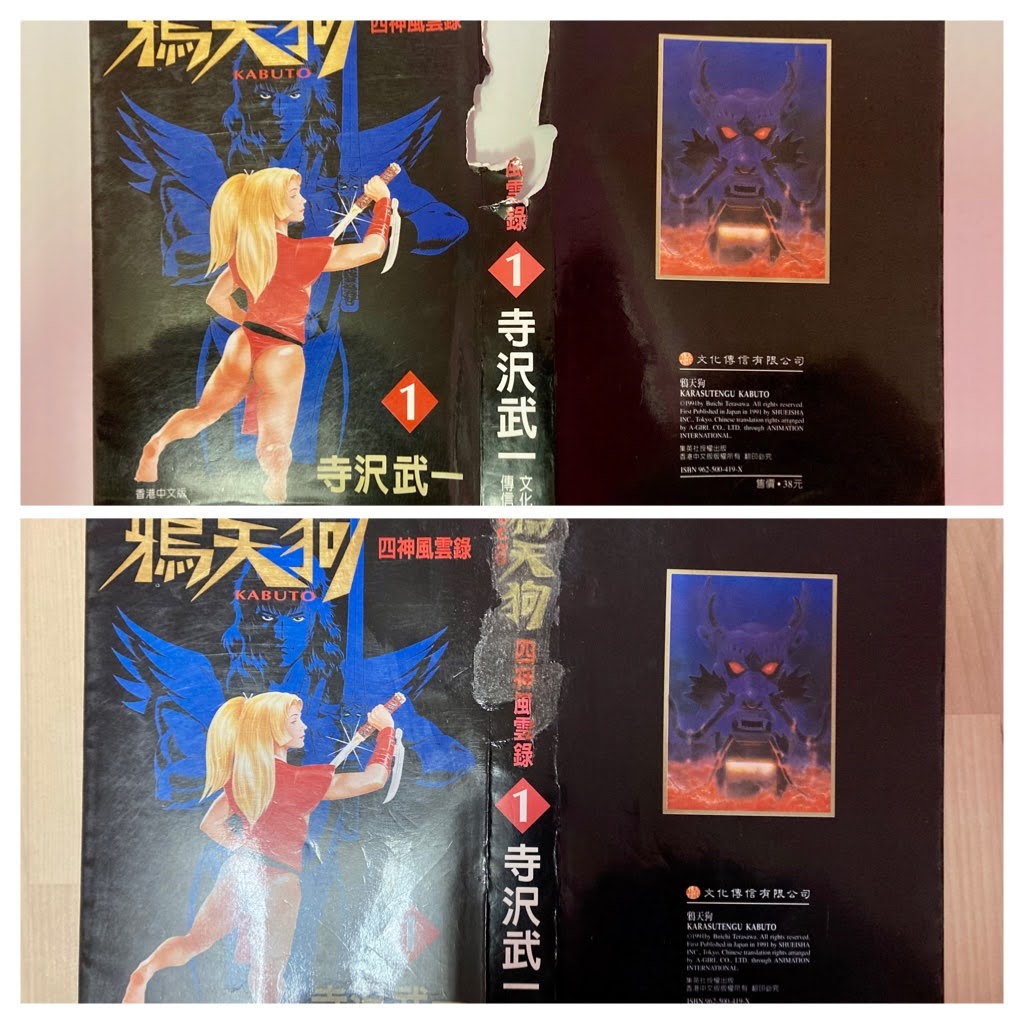
This image presents the difference between before and after treatment, photos taken by Sandra Song. 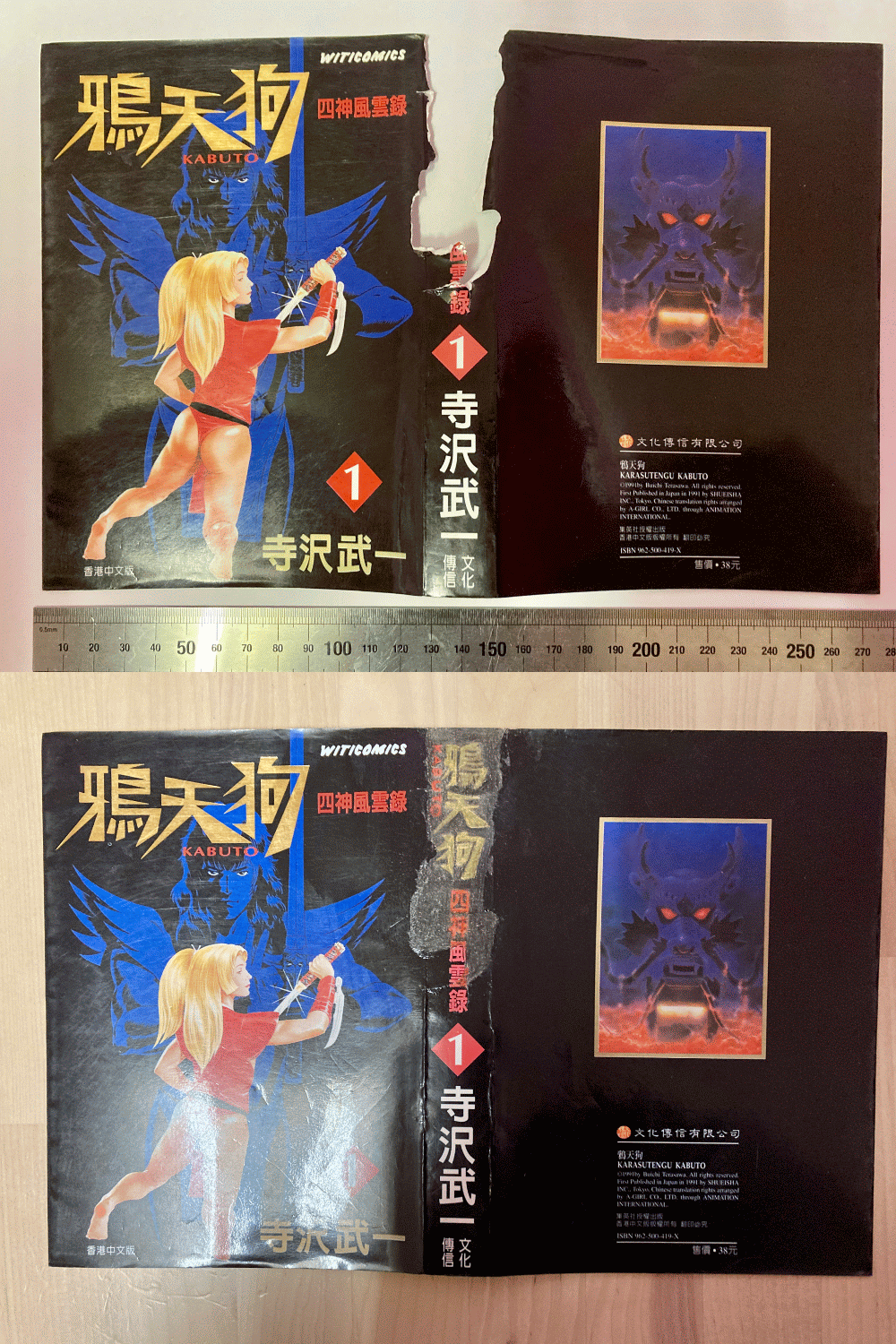
Animation made by Sandra Song. 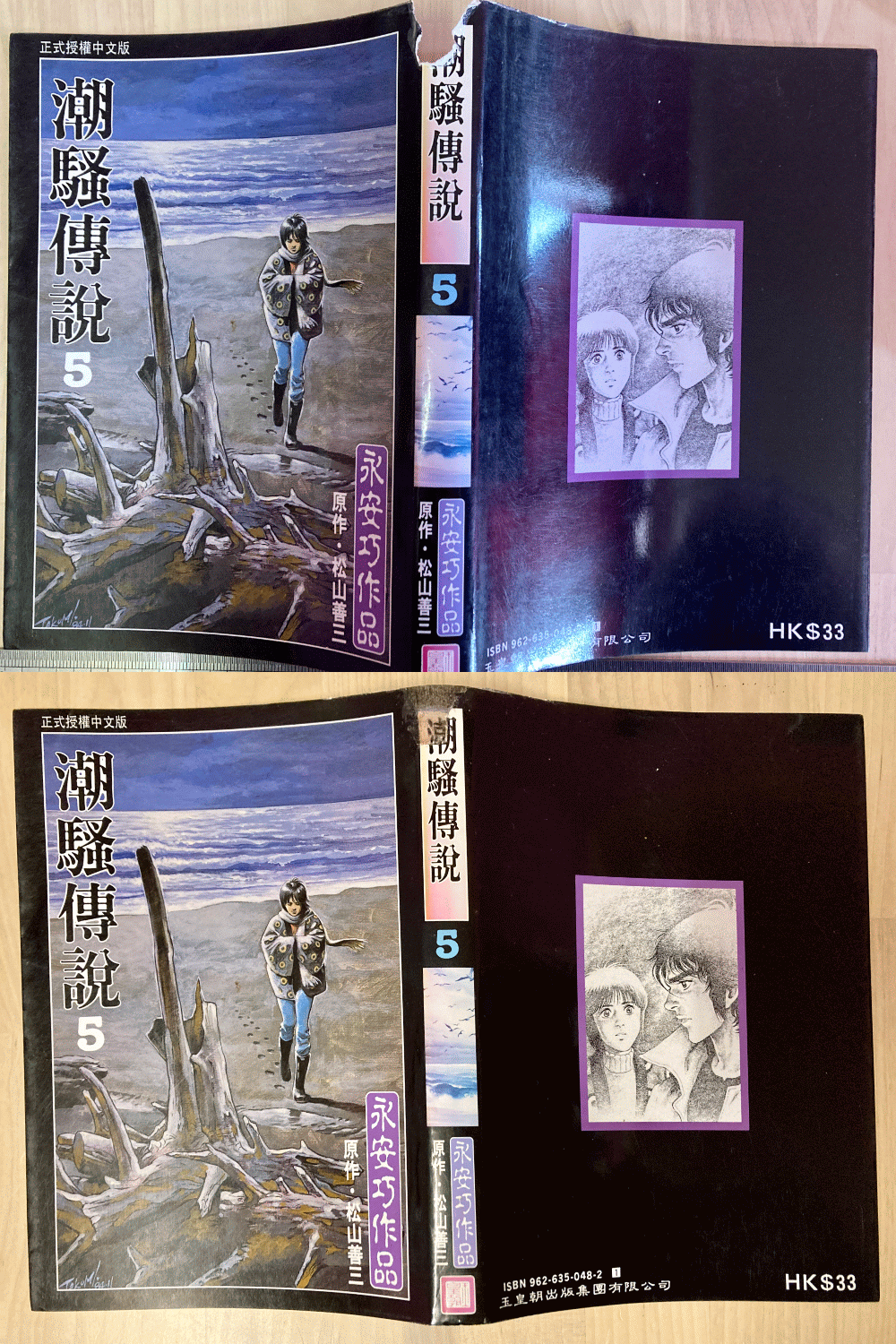
Animation made by Sandra Song. -
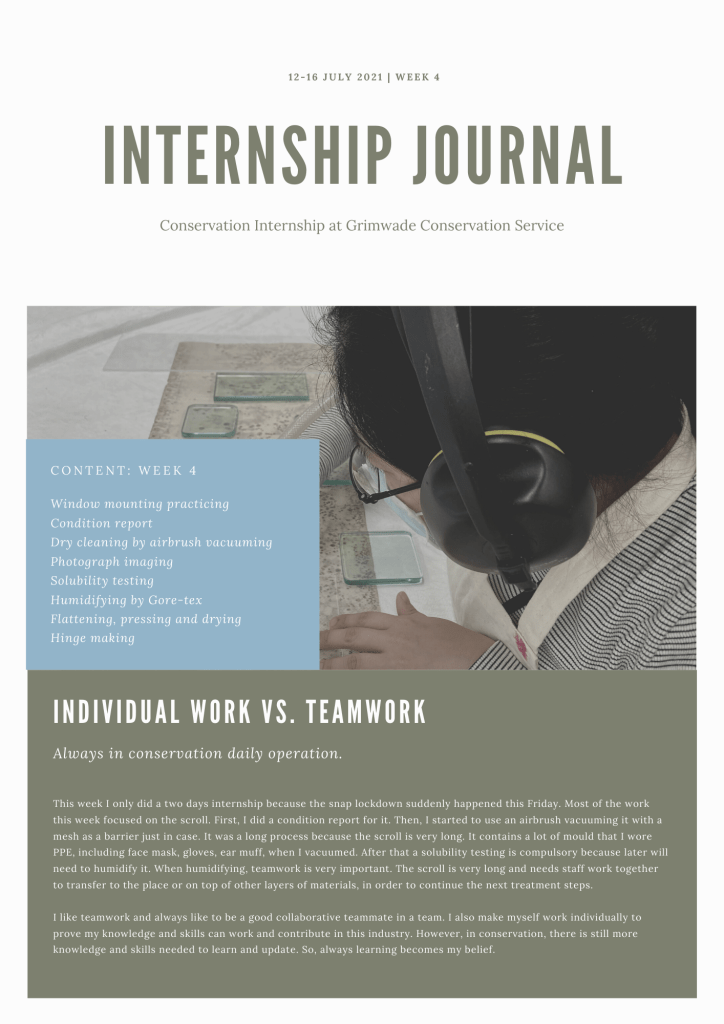
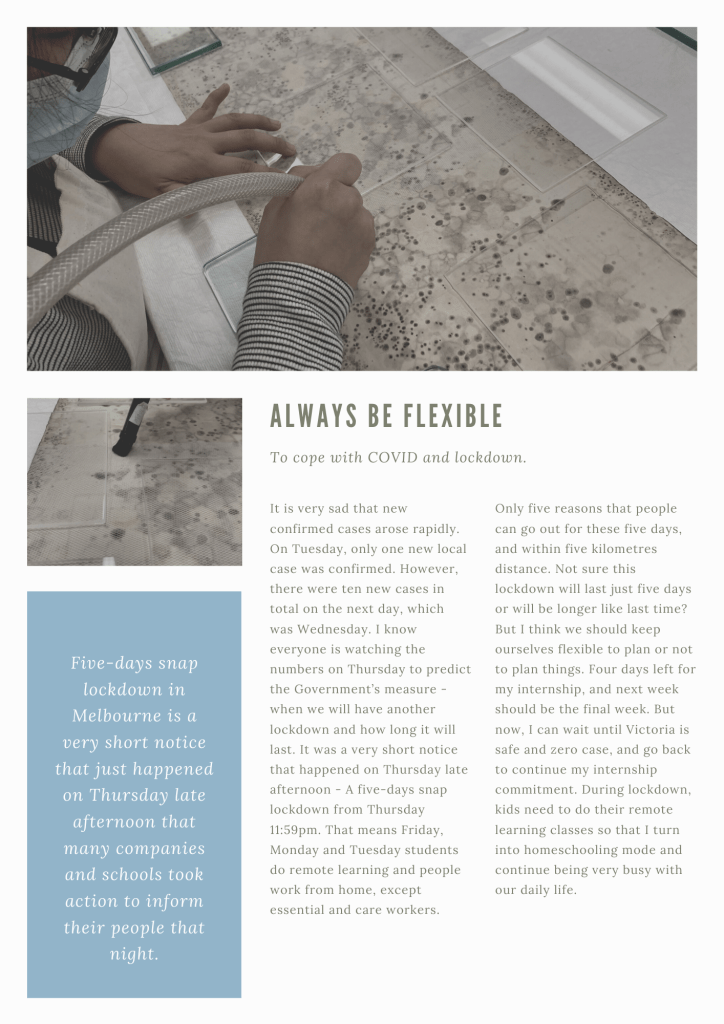
Internship Journal, Week 4
-
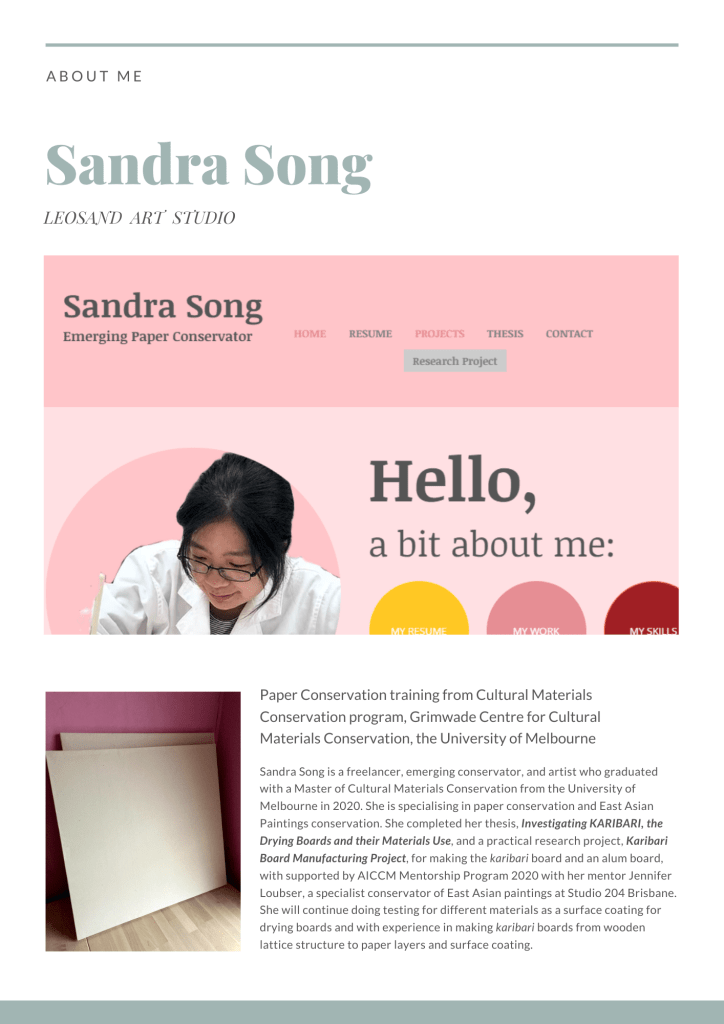
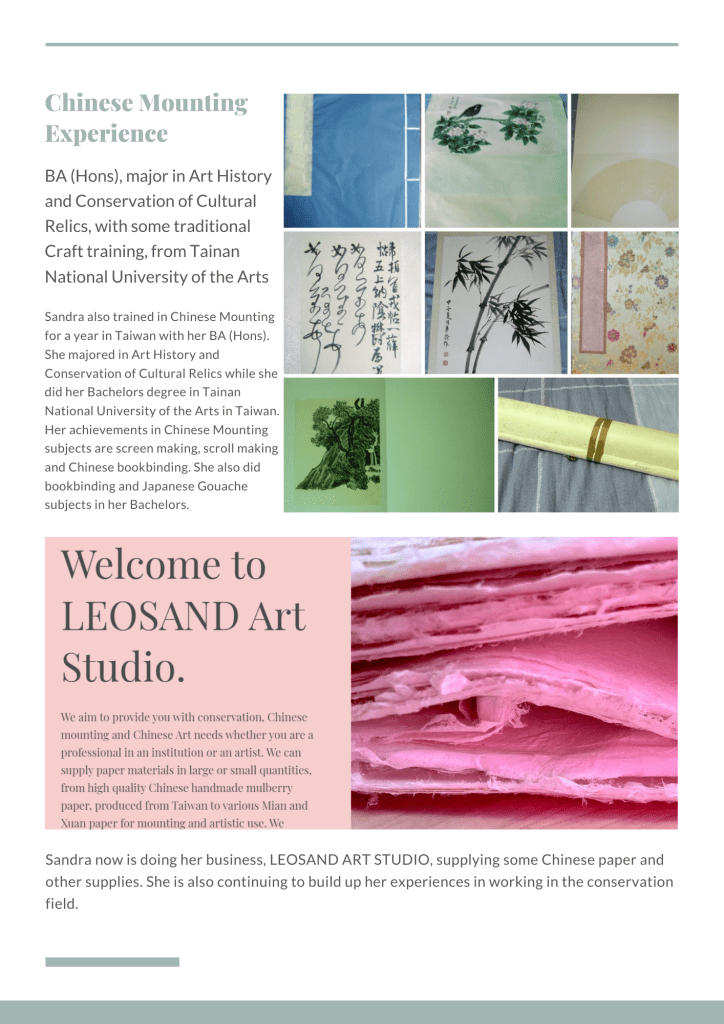
About Me
-
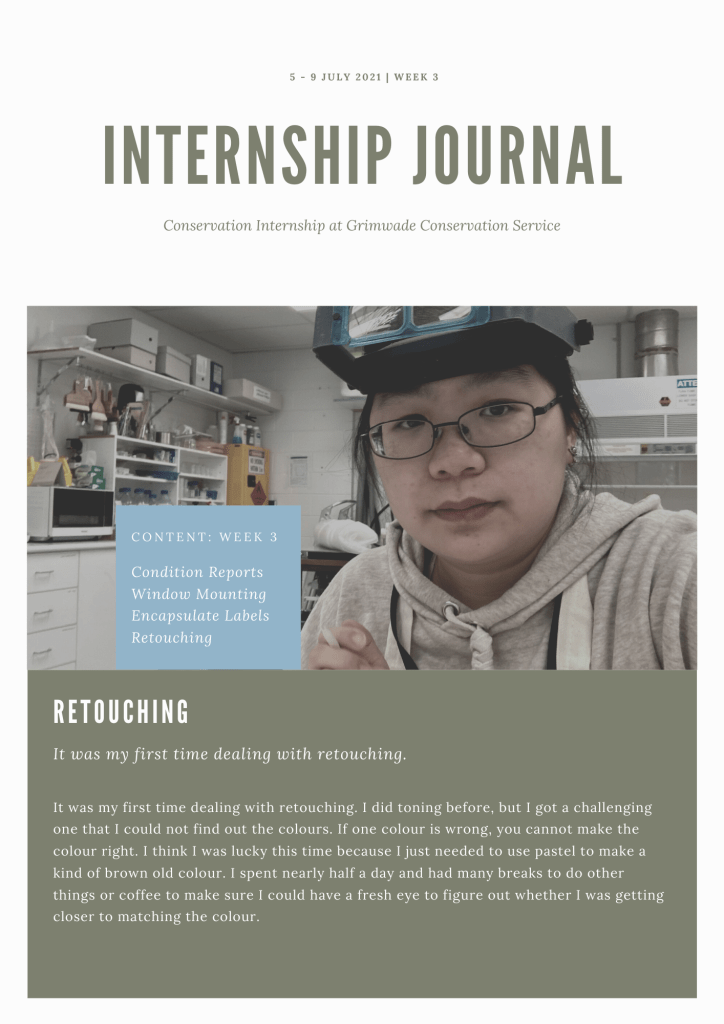
Internship Journal, Week 3
-
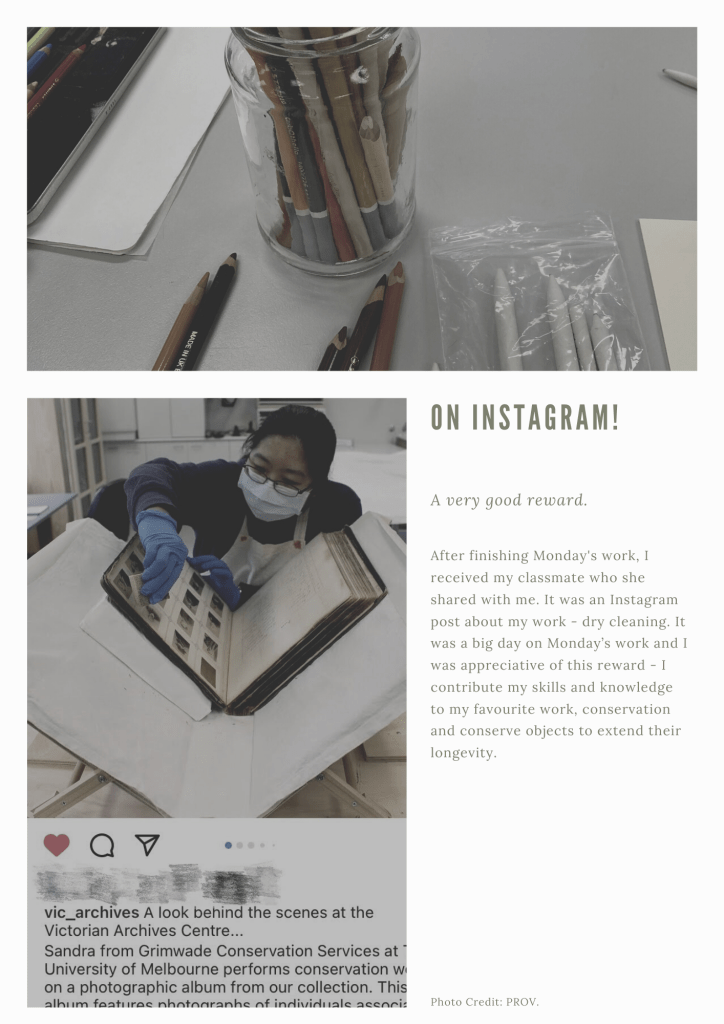
An Lovely Conservation Activity – 5 July 2021
-
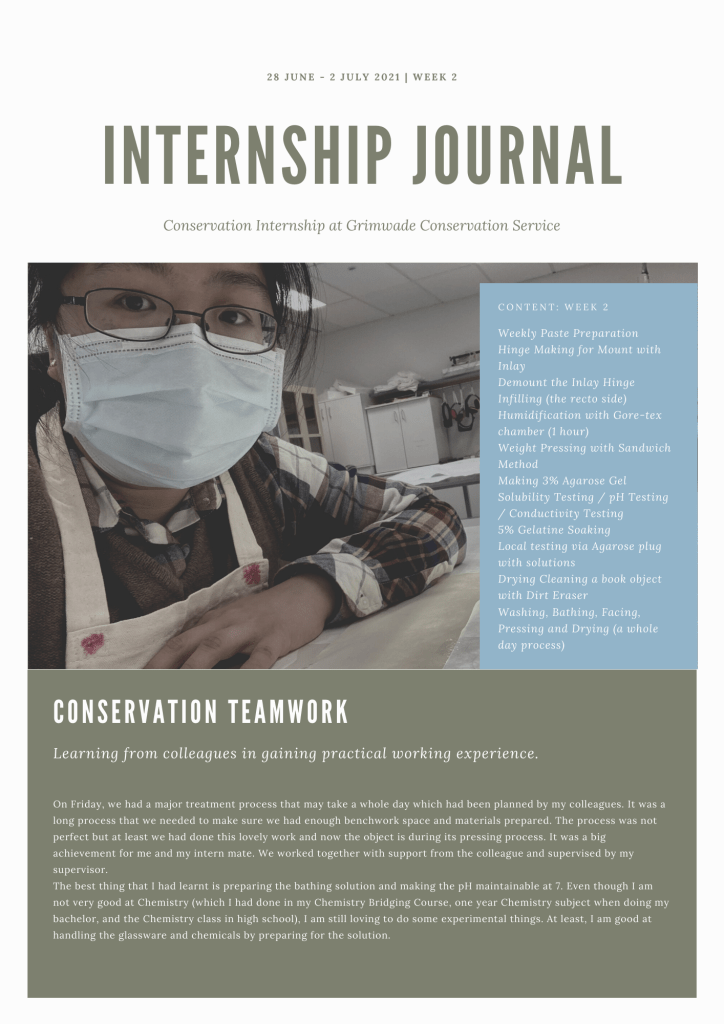
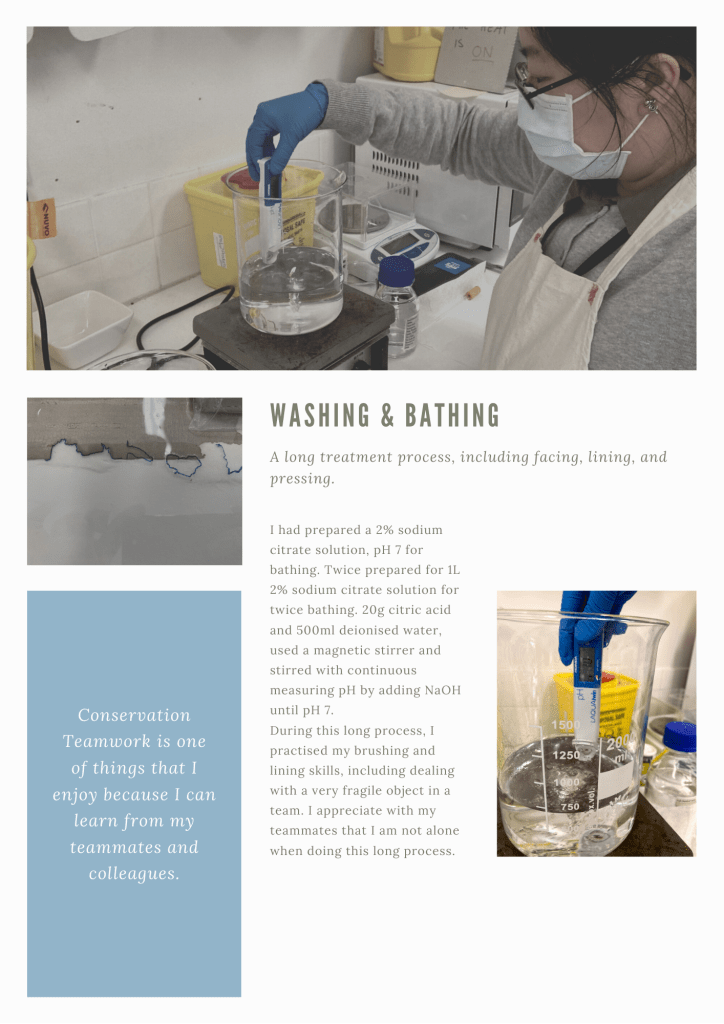
Internship Journal, Week 2
-
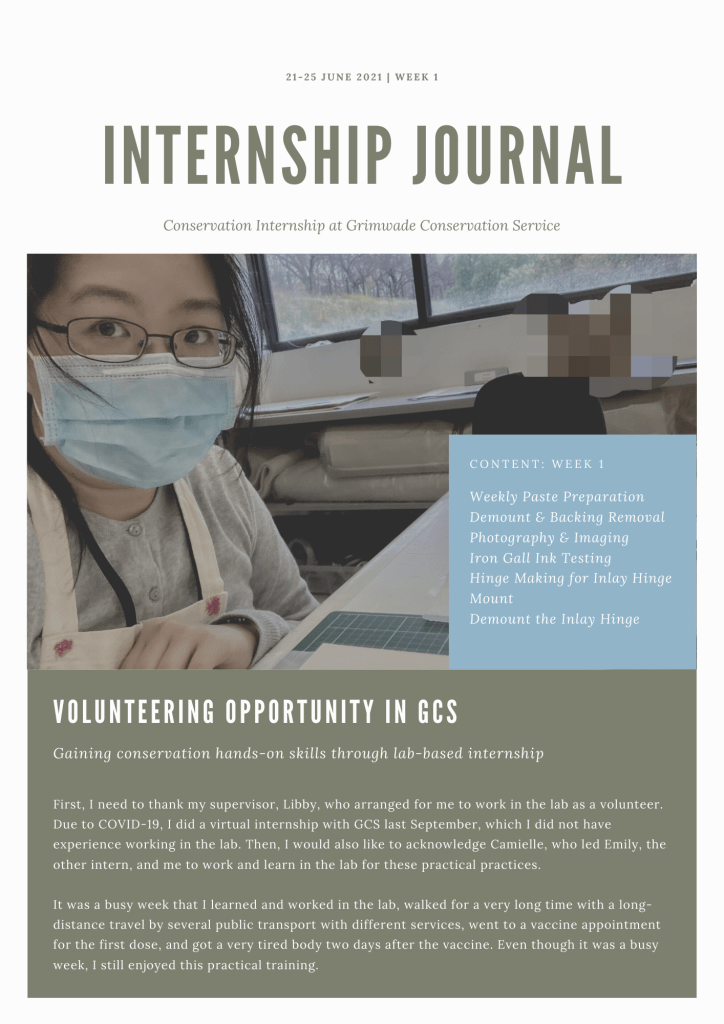
Internship Journal – Week 1

-
Insight a Project Management Planning – A Scenario of Photos Preservation from BSBPMG522 Undertake Project Work
Fig. 1. The presentation slide of the photo’s preservation project. In this article, the author focuses on looking insight into project management planning, by a made-up scenario of the Photos Preservation Project, when doing this unit which is called BSBPMG522 Undertake Project Work in April, May, and June 2021. Each paragraph introduces this project management planning, which is divided into different sections, including
- The project brief,
- The communication plan,
- The risk management and contingency plan,
- Developing a work breakdown structure (WBS),
- Gantt Chart,
- Key milestones,
- Budget allocation & budget analysis and review,
- Recordkeeping, and
- Lessons were learned in this unit.
The Project Brief
Title of Project Photos Preservation Project Rationale To restore and preserve the client’s photos, including making them all digital as a backup, remedial treatment, and rehousing, and helping the client to keep the treasures which can reflect the Victorian historical and social values in ca.1950-1980. Project Team The author (emerging paper conservator) and XXX (project manager, assuming project manager is the supervisor) Deliverables Remedial treatment for photos, image digitalisation (backup data in a hard drive and cloud), display and storage packages (framing and storing in enclosures), treatment report including preservation suggestions. Project Sponsor The client is the sponsor who determines the scope of the project and how far the treatment will go. Estimated Cost Various (treatment options) Risk Budget issues, technical issues, OHS issues, HR issues, materials and resource issues, project management failure, external issues, like when in transit. Project librarian (record keeper) and how records will be maintained The conservator is the project librarian to keep the records in the paper- and digital copies and archives them. Timelines 2 months Table 1: The project brief. It is a two-month photos preservation project in the scenario that the author will restore and preserve the client’s photos, including making them all digital as a backup, remedial treatment and rehousing, and helping the client to keep the treasures which can reflect the Victorian historical and social values roughly in 1950 to 1980. Project team, the author is an emerging paper conservator who graduated in 2020 from the cultural materials conservation program, to manage this project and the project should be approved by XXX, the project manager (in here, assuming the supervisor) and the client will also approve the treatment proposal to assist to commence the treatment and project. Deliverables are treated photos, digital images in a hard drive and backup online, display and storage packages, treatment report. Display and storage packages mean some photos need to be framed after treatment as the client’s requirement and the rest of the photos should be packed in a storage standard for home storage. These include an appropriate shipping package with insurance to ensure the deliverables will be sent back to the client. The project Sponsor here is the client who determines the amount of the budget, and the client can choose the treatment options from the suggestions. Estimated cost the author puts various because of the treatment options from the client and because this is a blog post that some details may not be suitable to disclose. Risks in this project, many risks have been identified and details refer to the section of the risk management and contingency plan. Project librarian means the record keeper that the conservator keeps the records and documentation.
The Communication Plan
Stakeholder/s Method of Communication Frequency of Communication Reason for Communication Client Phone, face-to-face or virtual meeting, email Monthly and when the communication if required Update progress and decision-making from the client due to budget Project Manager Face-to-face or virtual meeting, email, messenger app from the workplace Weekly and when the communication if required Update progress and any changes, and incident report if required The Conservator Face-to-face or virtual meeting, email, messenger app from the workplace Weekly and when the communication if required Any information which the conservator needs to follow up and keep records Artwork Transport (shipping company) Email, phone call Be intensive at the final phase of the project Shipping and insurance Table 2: The communication plan. The Risk Management and Contingency Plan
Risk Likelihood of Risk Consequences Level of Risk Contingency External issues like photos being destroyed in transit Possible Lose irreplaceable photos, clients being angry/upset which leads to a bad reputation, and reparation if required. Medium-High Find an express company with a high reputation, set up a delivery tracking, add insurance, and feedback from the client to confirm the receiving. Budget issues if the client has not enough money for this project Likely Affecting the quality of the deliverables, under the expectations from the client, cannot undertake a full restoration, only can-do part of treatment levels. Medium-High Seek grants if the client meets the eligibility, scope down the project and treatment levels, and prioritise the photos which need to be restored. OHS issues – Chemical spills Possible Severe burns, damage eyesight, and cause harm to the respiratory tract. Medium-High Conduct a risk assessment before the treatment, read the MSDS sheet before handling the chemicals, and two people working when dealing with the chemicals. OHS issue – sharp tools like scalpels Possible General injuries with blood loss and eye injury. Medium-High Not using the sharp tools when hurrying, tired, and improper places, and wearing safety goggles when using a scalpel. OHS issue – Odour organic solvents Possible Staff may feel headaches or feel dizzy or nauseous and may cause severe health issues, like cancer. Medium-High Adequate ventilation, use fume hood equipment when dealing with odour organic solvents, and wear face masks or respirators. Project management failure Possible Loss of profit and reputation, client complaint, loss of trust and relationship from the team, and cannot finish the project in time. Medium-High Seek consultation from experts, give flexible timelines, and make sure enough HR resources and materials before commencing the project. Materials and resource issues – out of stock or delaying for shipping Possible Cannot finish the project in time, need to spend time waiting for the materials or resource arriving. Medium-High Order early when receiving the approval from the client, backup options for purchasing and store basic materials in the workplace. Payment issue if the client does not pay the money Unlikely Loss of profit, waste time for treating objects, waste resources. Medium Set up a payment plan, pay a deposit to cover the cost of materials, and receive full payment at the same time/before photos are delivered. HR issues such as not enough staff to work on this project Possible Cannot finish the project in time as the expectations, overloading work for the staff. Medium Reschedule the project timelines and be flexible in time management. Technical issues like the scanner may not work, the computer breaks down, poor Internet that cannot save digital copies to Cloud Unlikely May need more time and cost to fix the issue. Low Medium Back up scanner and computer and upgrade the data usage plan from the Internet company. Table 3: The risk management and contingency plan. Ten risks have been identified in this project that the author has listed in the above chart by analysing the likelihood of the risk and level of the risk to figure out the consequences and contingency plan to deal with. The risks involved can come from anywhere in this project and some examples of different areas are:
- Transit (the photos being destroyed in transit),
- Clients (clients not paying/ being able to pay),
- Technical (scanner breaking down, computer issues), and
- OHS issues (chemical spills).
Each risk has been analysed to give an idea for the likelihood of the risk occurring, consequences if they do occur, the severity of the risk in association to the project, and it also allows the author to consider the contingency to prevent the risks occurring.
Most of the risks identified have a level of risk that is medium/high in meaning that there are a lot of things that could prevent this project from being completed entirely. The contingency plans are to prevent these from happening to be able to complete the project. It is essential to do a risk plan as it gives the project planner not only plans to prevent accidents from occurring but also gives the project planner an idea of the budget that needs to be allocated to the contingency plans.
Developing a Work Breakdown Structure (WBS)
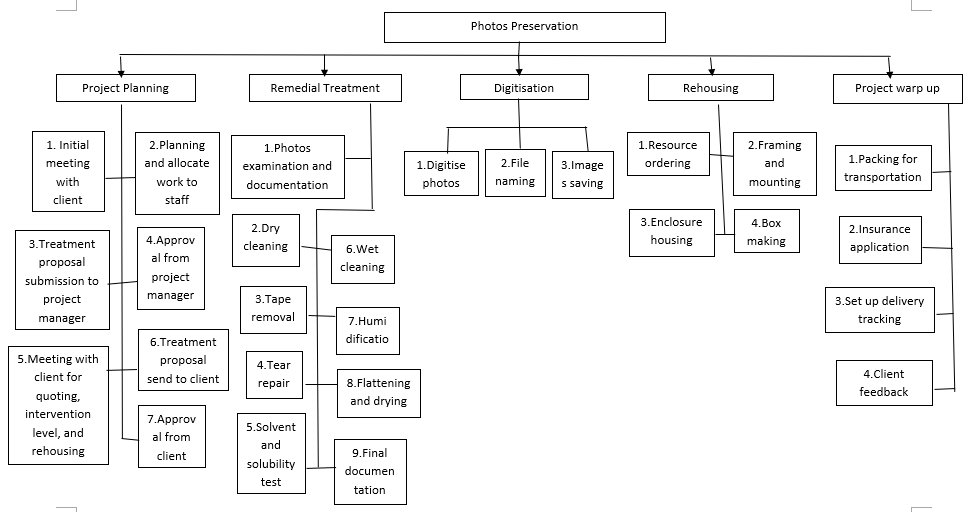
Fig. 2. Diagram of WBS, the work tasks. In this diagram of WBS, there are five categories and many tasks to do in this project.
The five categories are:
- Project planning
- Remedial treatment (the treatment options and levels should discuss with the client due to the budgeting)
- Digitisation
- Rehousing
- Project wrap up
All tasks are:
Project planning
- Meeting with the client and understand their needs and expectations (initial meeting)
- Planning and allocating work to staff
- Submit the treatment proposal to the project manager
- Seek approval from the project manager
- A meeting with the client to discuss quoting, treatment intervention level (priorities), and rehousing materials
- Send the treatment proposal to the client
- Waiting for approval from the client
Remedial treatment (Treatment steps vary by the selected option)
- Photo’s examination and documentation (including image taking before treatment and researching the background)
- Dry cleaning
- Tape removal (for certain photos)
- Tear repair
- Solvent and solubility test
- Wet cleaning (for certain photos)
- Humidification
- Flattening and drying
- Documentation (including treatment report, after treatment photography, the recommendation for photography preservation)
Digitisation
- Digitise photos
- File naming
- Save the images to the hard drive and cloud
Rehousing
- Order the suitable size picture frames for framing (for certain photos)
- Framing and mounting
- Store other photos into the enclosures
- Make a box for the entire storage
Project wrap up
- Packing for transportation
- Insurance application
- Set up delivery tracking
- Client feedback
Gantt Chart
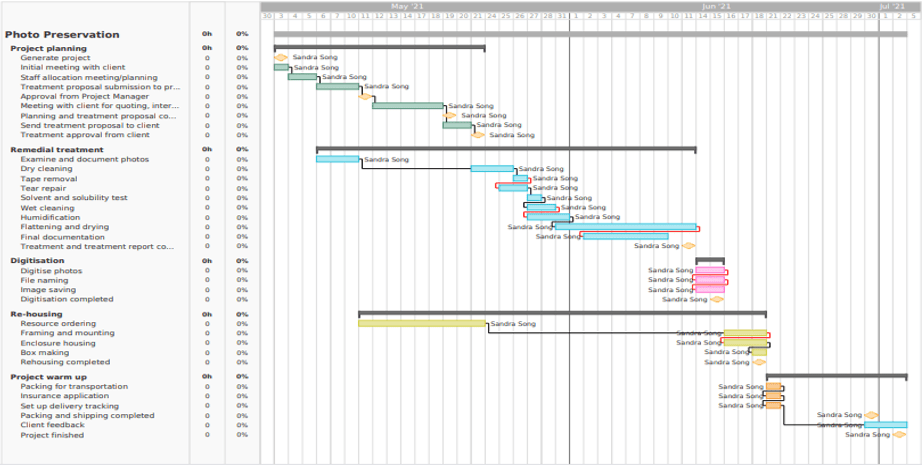
Fig.3. Gantt chart for this project. Gantt Chart is a nice tool the author likes to use when dealing with the project timelines. Moving on to the above Gantt chart, as you can see a timeline split into five sub-categories spanning the entire project, the first category in green represents the first three weeks of meeting with the client and organising the future of the project. This can be partially done side by side with the second category Remedial Treatment because by generating a treatment proposal the conservator needs to examine and document the details and address the problem-solving and decision-making for the treatment options. Remedial treatment covers the actual treatment from initial examination to final drying and documentation with a small delay at the beginning for ordering the needed resources as shown in the large yellow bar below. Digitalisation is one of the shortest categories shown in pink. Digitalisation encompasses digitising the photos and saving them in case the originals are lost or damaged in the future. Next up is rehousing as shown in yellow, most of which can be done in any order, barring the first bar which covers ordering required resources which the author mentioned earlier. It leads the final section of the chart shown in the small amount of orange below, to represent setting up the delivery tracking, packaging and insurance application ending in client feedback.
Key Milestones

Fig. 4. The presentation slide of key milestones. In the first key milestone, an initial meeting with the client is held to plan the project accordingly and gain a proper perspective of the upcoming project. The second key milestone marks the completion of the planning and treatment proposal that allows the client to give the final check off. The third key milestone is hit after the restoration and/or preservation of the objects completes, along with the treatment and the completion of the following treatment report. The fourth key milestone is digitalisation completed which marks the end of digitalising the photos, in case of future incidents with the existing photos. The fifth key milestone is a small but important milestone that marks the completion in rehousing of the existing photos. The sixth key milestone marks the packaging and shipping reaching its completion, and all left is to wait for the delivery to reach the client. The final milestone simply marks the end of the project.
Budget Allocation & Budget Analysis and Review
Item Hours Cost Documentation 8 $ – Digitisation 2 $ – Treatment 30 $ – Rehousing 2 $ – Administration 2 $ – Contingency (10%) 4.4 $ – Materials used in the treatment – $ – Transportation (including insurance and packing) 0.25 for packing $ – (plus, parcel shipping & insurance) Polyester sleeves – $ – Photo frames – $ – Total $ – Table 4: Budget table. Here the author just listed the items that need to be cost and estimated hours when planning. The treatment itself will cost the most as it is the main part of this project, it involves the most time and effort, so it must have the highest part of the budget allocation. In each area addressed which has also included the hours involved and factored that in as well for the staff wages. A breakdown like this also helps the project planner to review the budget to see if keeping under.
Record Keeping
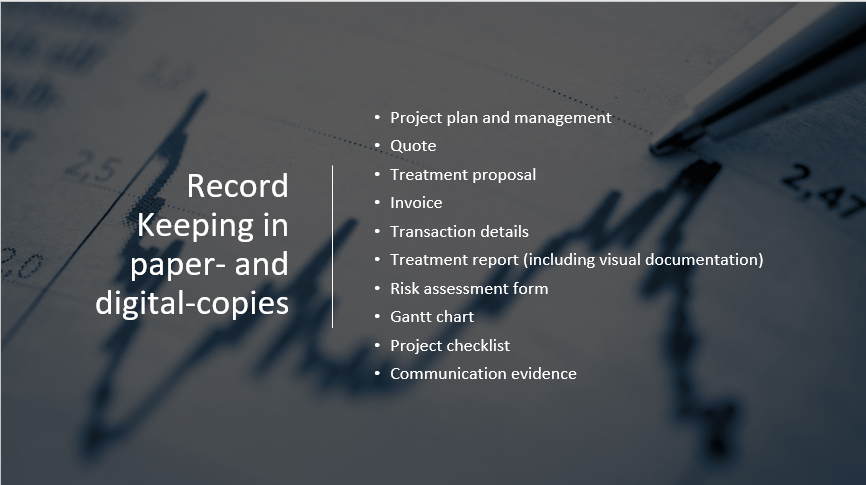
Fig. 5. The presentation slide of record keeping. There are many documents that the project planner should keep, like project plan and management, quote, treatment proposal, invoice, transaction details, treatment report, risk assessment form, Gantt chart, project checklist, and communication evidence. These should be kept in paper and digital copies.
What Lessons were Learned in this Unit
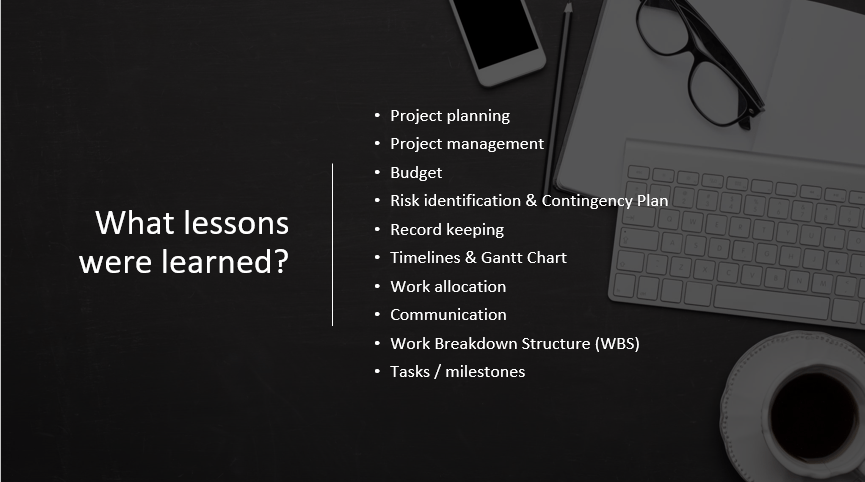
Fig. 6. The presentation slide of what lessons were learned. As the dot points on the slide mentioned that the author had learned from this unit, including this project planning, without adequate planning the planner may screw up the project. In terms of the budget, which needs to know how much exists, any sponsors or external financial support? If not, should the project planner seek more possibilities or scale down the project? In this preservation project, if the client does not have enough money, we can have other treatment options to prioritise the photos which should be treated and how far we treat these photos. Work allocation and communication are the important elements in the project work. How to work and facilitate in a team and how to communicate with stakeholders, the planner should find out the effective approaches to make the project work easier. Use the appropriate tools and channels, which the author thinks are varying and depending on the situations that need to be considered. Additionally, undertaking project work should be aware of communication skills and people’s thoughts. Remember to respect the person you are talking to and proactively listen to their thoughts during the conversation to figure out the best solutions.
-
AICCM Mentorship Program 2020: Karibari Board Manufacturing Project
Background
An extended-research project according to my thesis
In 2020 when I was doing my second-year master study of cultural materials conservation, COVID-19 arose and the situation looked not positive. Pandemic level with lockdown in Melbourne meant that I could only do a research-based thesis without the ability to access the lab to do practical-based research. Also, students could not access the library to borrow books, so references were only accessed online, such as academic journals, e-books, or YouTube videos. It was a challenging period and undertook the thesis project during the strictest restrictions and lockdown. These limitations made me unable to conduct testing on different surface coating materials for comparison. Even at those challenging moments, I could not purchase some resources from overseas because the border had been closed. Delivery was delayed, and I also have budget issues that require creativity.
AICCM Mentorship Program 2020
I saw this mentorship announcement and thought I could put this idea into place with the program once I finished my thesis. Luckily I met a great mentor, Jennifer Loubser, a specialist conservator of East Asian paintings at Studio 204 Brisbane, and previously at Honolulu Museum of Arts, East Asian Paintings conservation department since 2005. She has also worked as a Paper Conservator at the State Library of Queensland since 2014, and ran a Karibari workshop there with her mentor. We had lots of conversations to discuss our thoughts and her experience in karibari boards. After an initial phone call, I set up fortnightly Zoom meetings to update my progress, stay in communication, ask any questions I came across, and receive my mentor’s feedback. I enjoyed these sessions of communication because I continued my learning from my interests and specialisation. I appreciated this opportunity and the people I’ve met in this program.
Project timing and timeline
This program is a three-month commitment actually I commenced at the beginning of 2021 after my master graduation from the University of Melbourne. I planned my schedule for 2021, and I think I can do this manufacturing project from summer to autumn (weather issue when applying the fermented persimmon juice). Meanwhile, I commenced my full-time half-year study for the Diploma of Leadership and Management at Victoria University. It is a business course. The main purpose is to support the students in gaining confidence with leadership and management, building relationships at the workplace with your team, how to facilitate your team, planning such as operational plan, strategic plan, reviewing the organisation policy, recruitment management, etc.
Below is a Gantt chart that I had learnt from my Diploma course, and I think it has helped to present my karibari schedule planning.
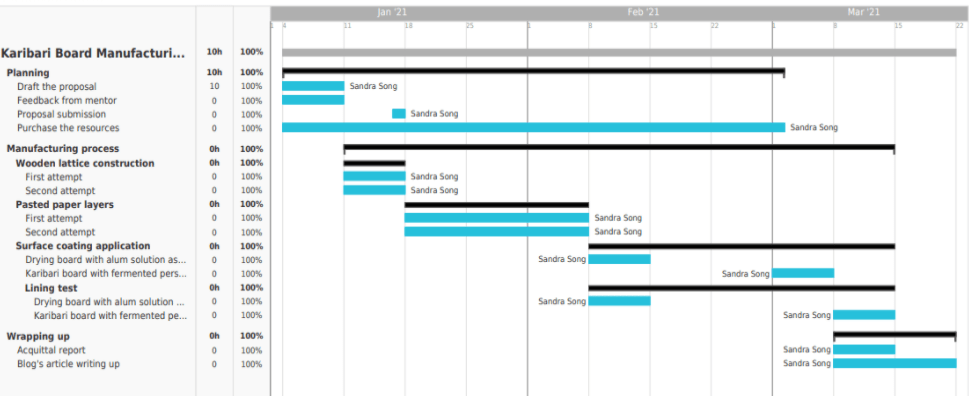
Fig. 1: Gantt chart task listing and bar lines. Luckily I found a reliable supplier who can be involved in my networking and also thanks to my native language it was easier to build trust and a relationship with my supplier. I can say it is still challenging for me to connect with suppliers but I am working toward my outcome. No matter how the COVID pandemic is, I can slowly make progress within the timeframe I set.
I also communicated with my supplier by using Line. Fu Lung Cotton Paper Co. Ltd Is the supplier I approached and I’ve been very satisfied with their service. I tried to approach a Japanese supplier but I cannot write a Japanese email so I wrote in English instead and it seems the communication had been lost. Maybe I will try next time without the time frame limitation.
Project Aim
Construct a sample-sized (600 x 600 mm) karibari board by following the instructions from Webber, Huxtable (1985), and Fraser (1988) to investigate its manufacturing process. During this project, I constructed a sample-sized karibari board by following the instructions from Webber, Huxtable (1985), and Fraser (1988) to investigate the manufacturing process. It was a practical-based project which extended from the author’s thesis (Song 2020) and commenced at a home-based working station in January 2021, lasting three months. The manufacturing process included constructing a wooden lattice, pasted paper layers, and surface coatings (i.e. alum solution and fermented persimmon juice).
Project Process
Communication Channels
After the initial phone call from my mentor, I set up a Zoom meeting fortnightly to report and update my progress and share information. I have enjoyed these conversations because we shared our thoughts in our professional areas and learnt from each others’ experiences. Jennifer suggested we post the kozo papers that we had used for karibari layers which can help me know more about some different types of kozo.
Regarding the details of manufacture of pasted paper layers and level of waterproof of surface coating, Ika Hsiao (Associate conservator of Chinese paintings at Cleveland Museum of Art since 2014) is the specialist conservator of East Asian paintings who presented her manufacturing experience via one Zoom meeting session, and updated my progress via Line.
Tools and Resources Preparation
- Woodwork stage
Hand saw, drill, clamps, rules, file (or sand paper), weights, and pine wood strips. A stable table surface when constructing the board. I prepared and built the wooden lattice in the backyard to avoid dust issues and used a mask as needed.
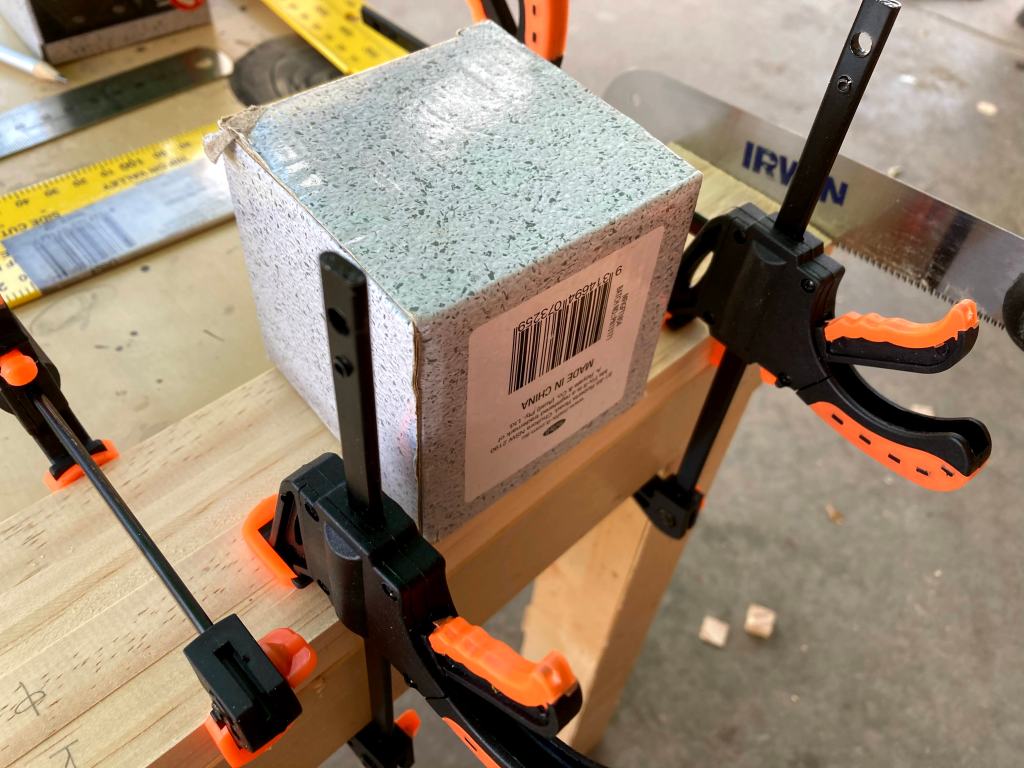
Fig. 2: Hand sawing the strips of wood. - Pasted paper layers stage
Kozo (mulberry) paper in different types of thickness, different brushes (pasting brush and smoothing brush), spray, wet and dry towels, wheat starch paste, sieve, and containers to place the paste.
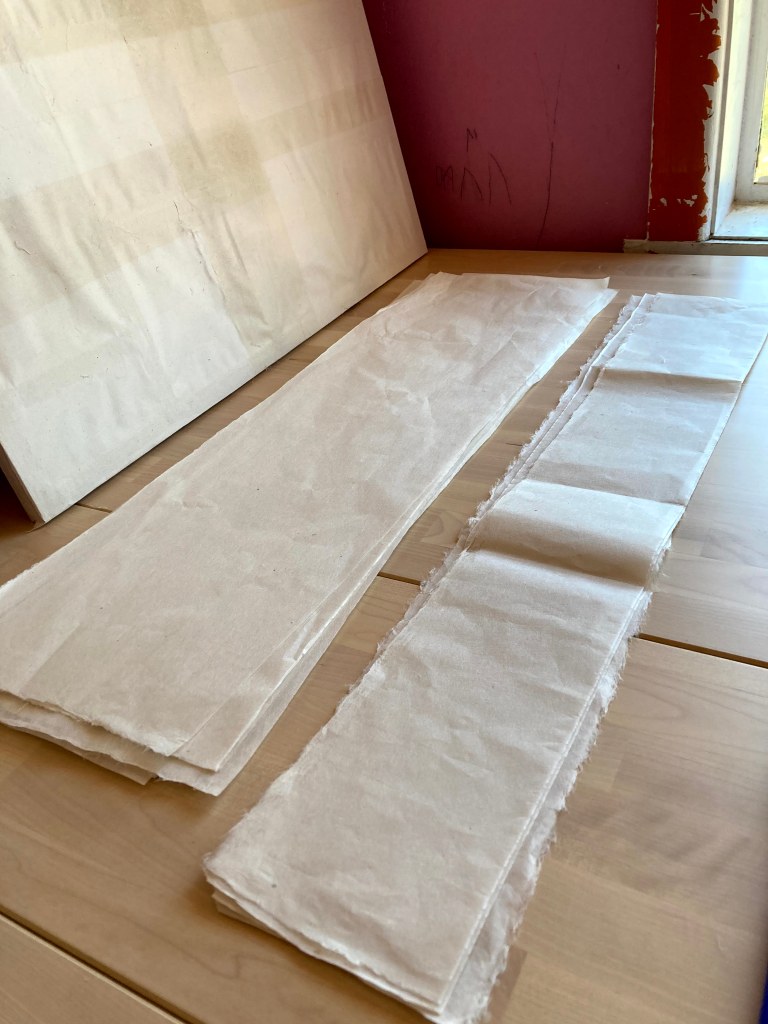
Fig. 3: Paper prepared for the third layer. - Brush for the coating layer
Brush, container and coating materials (alum solution and fermented persimmon juice).
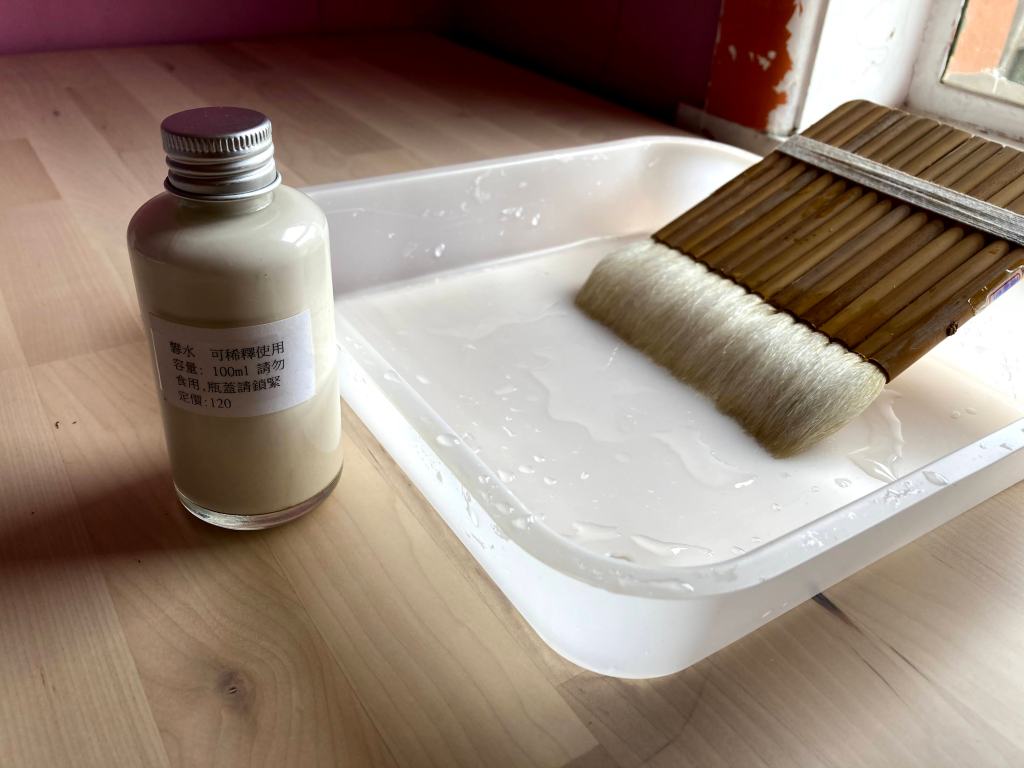
Fig. 4: The preparation of alum solution and tools. 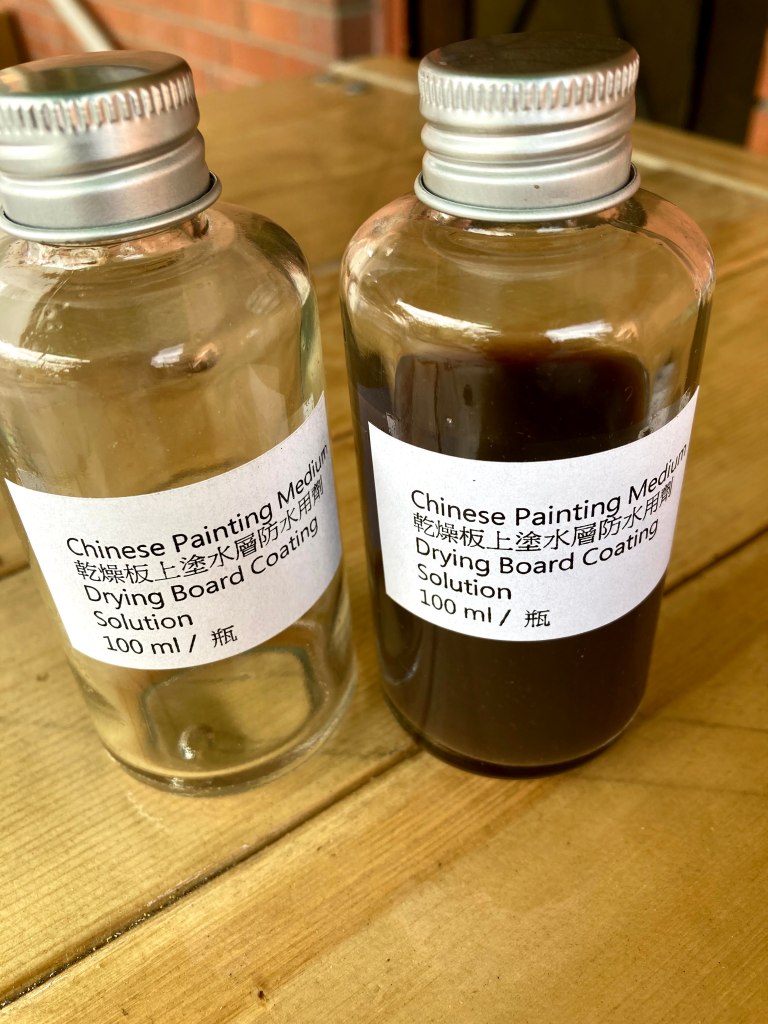
Fig. 5: The fermented persimmon juice which I sourced from Taiwan. Knowledge and Skills Preparation
Knowledge of karibari board is from my one-year research project (conservation minor thesis at the University of Melbourne) and consultation with some professional and experienced conservators, including Ika Hsiao during the initial approach in 2020. Skills like brushing and pasting skills, which I learnt from the 1-year subject of Chinese Mounting ten years ago when studying my Bachelors. I am so grateful to have studied for my Bachelors degree in Art History at the Tainan National University of Arts, even though it is a very rural place. It is a course teaching art history, museum studies, and conservation. After two years students can choose a pathway and specialisation. After I chose conservation, I selected paper conservation instead of Asian paintings and objects. During this two-year training, I learnt what conservation and preventive conservation are, how to write condition reports, materials history, one year of basic chemistry, and practical subjects such as Japanese gold leaf decoration technique + Eastern Gouache (nihonga), ink painting, bookbinding, Chinese Mounting, calligraphy, watercolour painting, and sketching. It is an excellent place for learning foundational knowledge and skills before the master study.
Karibari Manufacturing Process
- Wooden lattice construction
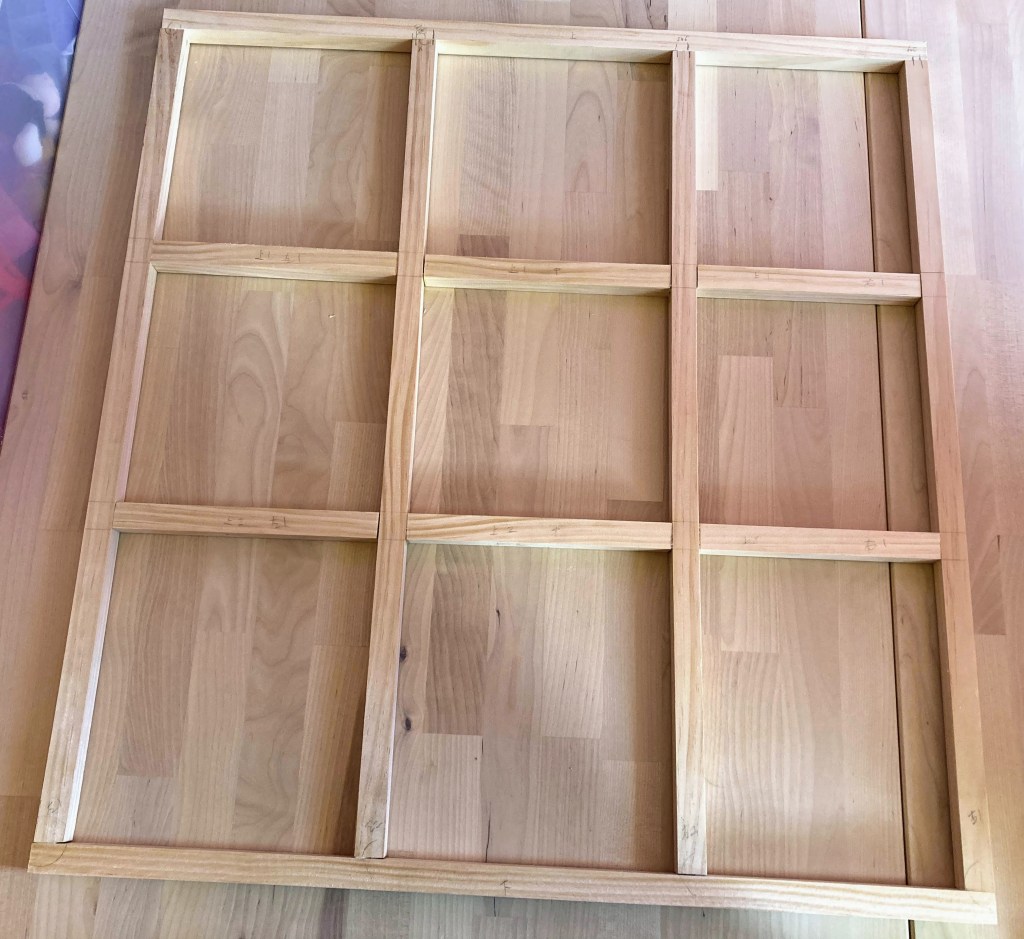
Fig. 6: Wooden lattice structure. - Pasted paper layers
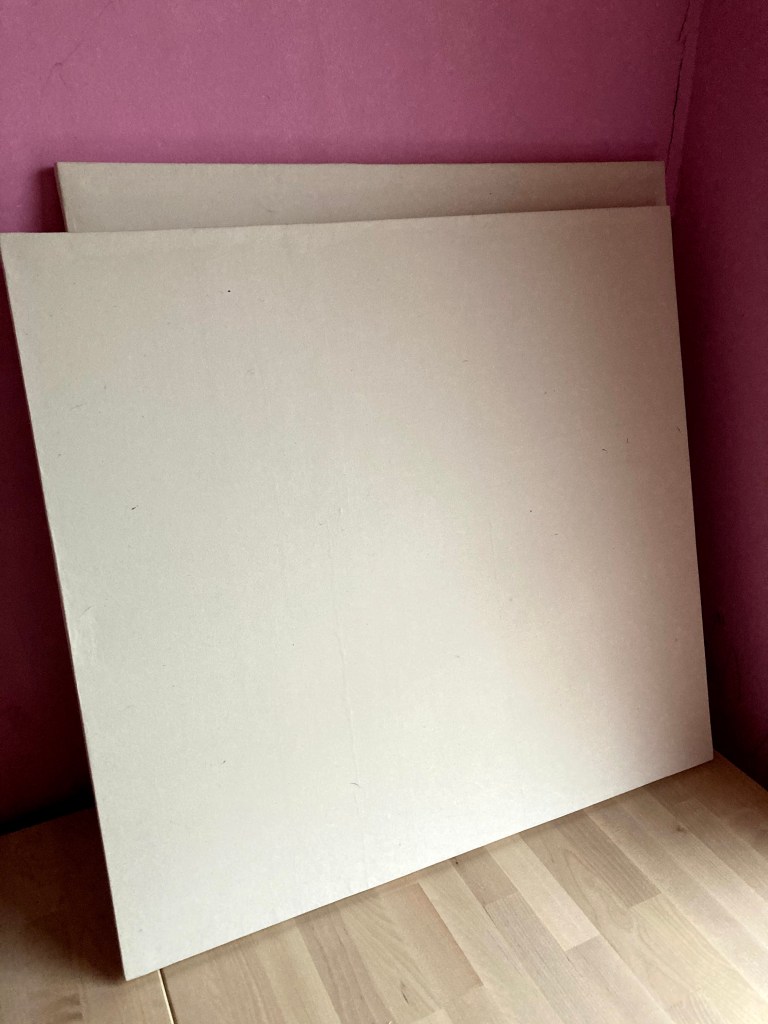
Fig. 7: Karibari boards finished with pasted paper layers. - Coating layer application
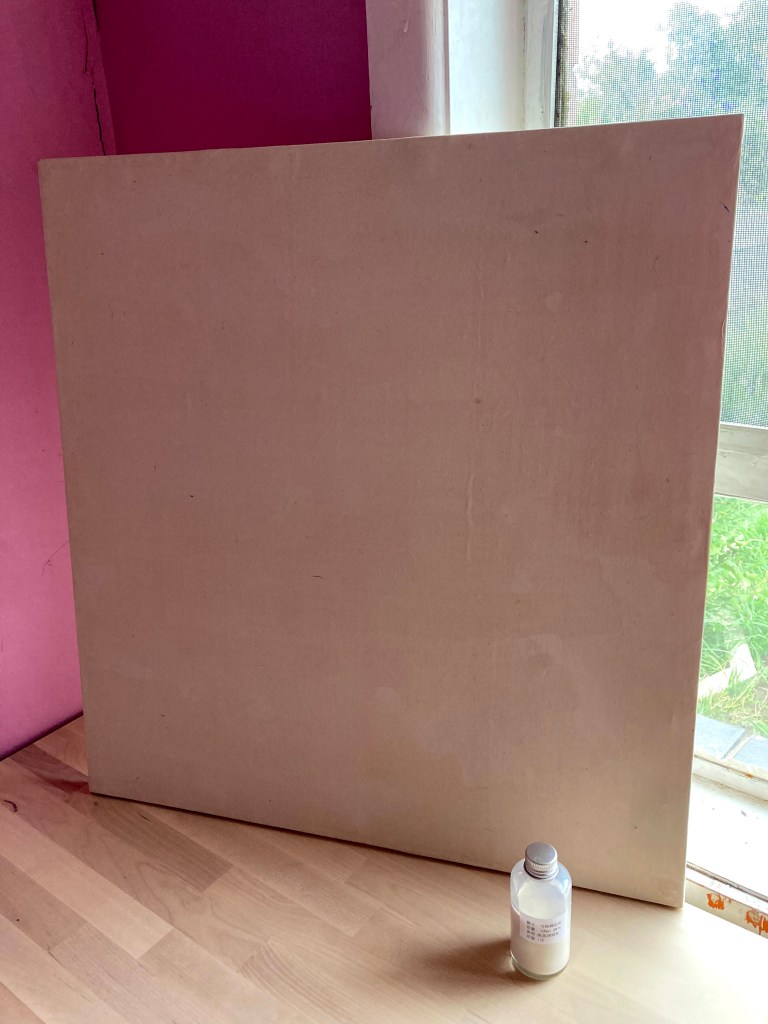
Fig. 8: A drying board coated with alum solution. 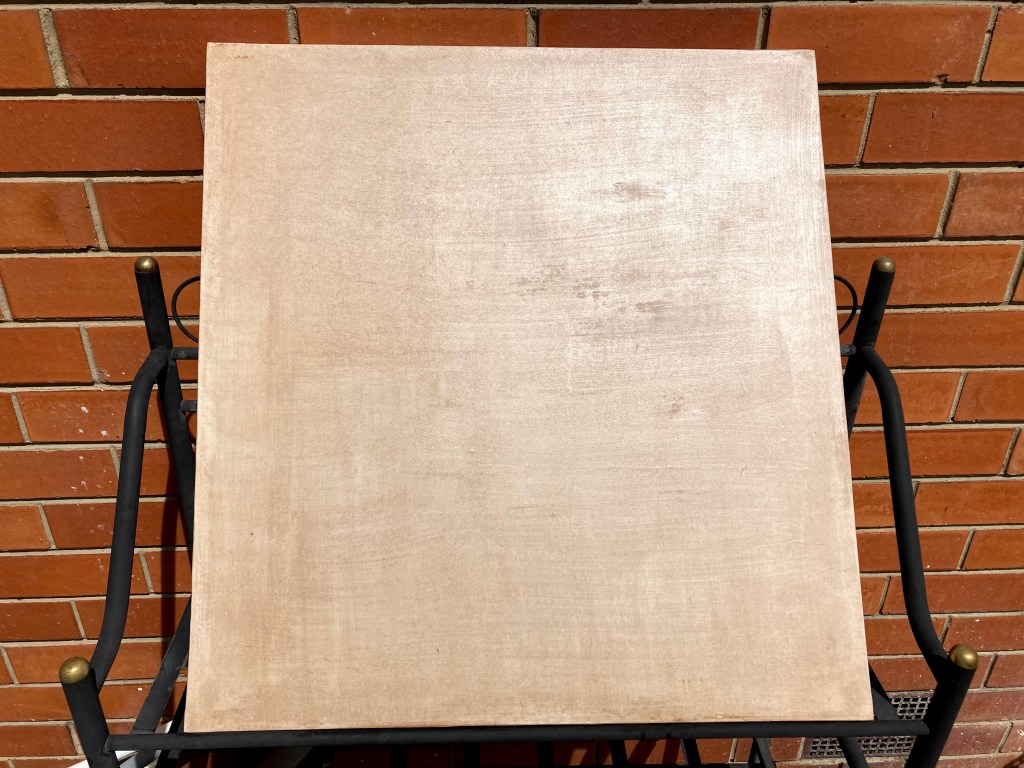
Fig. 9: A karibari board coated with the fermented persimmon juice outside. A Timelapse video embedded to show the application of surface coating with the fermented persimmon juice in my backyard.
https://youtu.be/sGgSKnaGui4 - Lining test
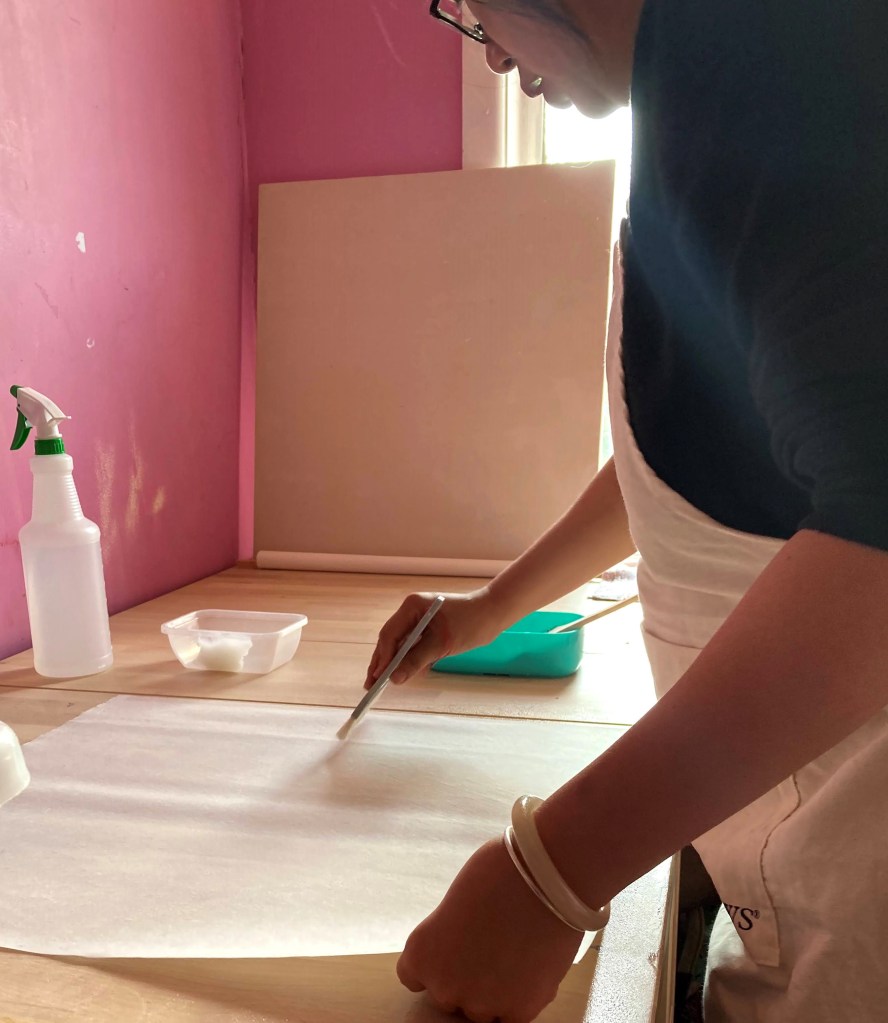
Fig 10: When applying the lining test on the board. Project Outcome
To make sure the drying board can work functionally, a waterproof test by applying a water drop to see the drying speed and the penetrating rate and lining test applied. Below is a table to summarise the result of the test.
Karibari board with fermented persimmon juice as a surface coating Drying board with alum solution as a surface coating The level of waterproof, see drying speed when testing by a water drop Very slow drying speed and water drop has penetrated the board Very slow drying speed and water drop has penetrated the board Lining testing (if satisfied with work functions) Satisfied (dry with flattening) Satisfied (dry with flattening) The project outcome is satisfied, and both these drying boards (no matter in Japanese or Chinese style) can be used for drying and flattening application in conservation treatment although limited in size.
Justification: decision-making for the final coating layer application
Through decision-making for the final coating layer application, I consulted with my mentors consistently when commencing the project. The challenge of deciding between my two preferred coatings was resolved when I decided to make two boards and purchase two coating materials (i.e. alum solution and fermented persimmon juice). Due to COVID, there are not many suppliers that can be sought. There are potential health and safety concerns, overseas shipping delays and the temporary stop of overseas shipping service that needs to be considered. I appreciate the supplier who is happy to send materials through.
What’s Next
There may be other coating materials that can be applied to the surface of the drying board. I haven’t had a chance to apply the conservation products such as Paraloid® B72 and RhoplexTM emulsion, the commercial products like floor finish, varnish, and Tung oil, or even the natural adhesive like shellac. Many adhesive materials have the same characters and they may have the potential surface coating if they don’t have any harmful substances transferring to the object which is applied on the drying board.
Home-based work station and limited budget scale down the project but so far I am satisfied with these attempts. I am so happy that I have drying boards with me and they can be my tools for doing lining practice and flattening and drying paper. I have four Japanese silk paintings that may be my next project, but before commencing I need to set up my working environment which is just a simple workstation.
After this project, I will spend time on my family commitments because obviously I work on weekends for my project and assignments. Any comments and feedback please feel free to leave below, I appreciate your thoughts.
Acknowledgement
I appreciate my mentor, Jennifer Loubser and the AICCM Mentorship Program supporting me to undertake this Karibari Board Manufacturing Project. It is an unpaid project that my mentor contributes her time discussing with me. I spent my Jobseeker payment from Centrelink to purchase the resources which I needed to complete this project. Furthermore, I would like to thank Ika Hsiao and her karibari board manufacturing knowledge which I don’t feel I only do by myself. Also, some of my friends in Australia, Taiwan, and the US (in conservation and other fields) follow with interest in my project. I appreciate you all and my family’s support to tolerate the strong smell of fermented persimmon juice coating application.
References
AICCM 2020, AICCM Mentorship Program, Australian Institute for the Conservation of Cultural Material, viewed 21 December 2020, < https://aiccm.org.au/membership/student-membership/mentorship-program/?fbclid=IwAR2YRPsTaE4CKuQqnODwu12JWityx4AbNWZXX8xPRWRBt0FClEupir3dmgQ>.
Fu Lung Cotton Paper Co. Ltd, Fu Lung Cotton Paper calligraphy supplies, Fu Lung Cotton Paper Co. Ltd, viewed 14 July 2020, <http://www.calligraphy.url.tw/content.php?cn=item&cid=52>.
Song, S 2020, ‘Investigating KARIBARI, the drying boards and their materials used’, GCCMC unpublished minor thesis, The University of Melbourne, Melbourne.
Smithsonian’s National Museum of Asian Art 2018, Making a Traditional Chinese Drying Wall, video, YouTube, 3 October, viewed 29 July 2020, <https://www.youtube.com/watch?v=8Rg12UXatZ0&feature=youtu.be&fbclid=IwAR0TjB10TKTFNpJaqBFXdGMEFeaftlgOsdRoEO1Bz6vxgEEGQ4TtPAL4HeA>.
The Folger Shakespeare Library 2014, Making a Karibari Board, video, YouTube, 2 May, viewed 11 May 2020, <https://www.youtube.com/watch?v=0rKNd2a_S5s&list=UUBOl-Rnudd-b0XJsmKDId-g>.
Further Links You May Be Interested
Blog articles from Jennifer Loubser
Recent blog article Jennifer Loubser wrote about how she has been using the karibari with the State Library’s original art collections lately.
https://www.slq.qld.gov.au/blog/gift-keeps-giving-generous-progress-karibari-board-workshop
Ika Hsiao’s podcast: Mustard Seed Art Conservation Studio
A series of podcasts for discussion of conservation and life experiences in Mandarin.
https://anchor.fm/ika-hsiao
-
Subscribe
Subscribed
Have a WordPress.com account? Log in now.

